
A low appraisal doesn’t have to kill your deal — but how you respond in the next 48 to 72 hours matters enormously. Whether you’re buying near Lake Anna, in Mineral, or along the Zion Crossroads corridor, a below-value appraisal triggers a specific set of options: challenge the number, renegotiate with the seller, bring additional cash to closing, or find a lender flexible enough to work through it with you.
This guide walks through six concrete strategies, tools, and lender types that Louisa County buyers have used to keep their transactions alive after a low appraisal. Some of these are free public resources. One of them is a conversation with the right mortgage broker. All of them are worth knowing before you assume the deal is dead.
For context on how broker independence helps in exactly these moments, see our About page and our Contact page if you want to talk through your specific situation.
Written by Duane Buziak, NMLS #1110647 | Coast2Coast Mortgage LLC NMLS #376205
A $20,000 Gap: What a Low Appraisal Actually Means in Real Numbers
Before diving into the tools and strategies, it helps to see the math clearly. Here’s a fully worked example based on a realistic Louisa County purchase scenario.
You’re under contract on a home in Mineral at a purchase price of $325,000. The appraisal comes back at $305,000. That’s a $20,000 gap. Your conventional lender will only lend against the appraised value — so you now have four realistic paths forward.
Path 1: Seller reduces the price to $305,000. The deal closes at the appraised value. Your down payment is calculated on $305,000. This is the cleanest resolution, but it requires the seller to agree.
Path 2: You cover the gap with additional cash. You close at the original $325,000 contract price, but you bring an extra $20,000 to closing on top of your planned down payment. If you were putting 5% down ($16,250 on a $325,000 purchase), you now need $36,250 at closing instead. That’s a significant cash demand, especially mid-transaction.
Path 3: You split the difference. Seller drops to $315,000; you bring $10,000 extra to closing. Both sides absorb part of the gap. This is a common negotiated outcome when neither party wants to walk.
Path 4: You explore a program switch. If the property is in a USDA-eligible area (and most rural Louisa County parcels are), the appraisal rules and reconsideration process differ from conventional. A USDA loan appraisal follows USDA Handbook guidelines, not Fannie Mae guidelines. Your broker may be able to pivot to a USDA path where the appraisal gap is handled differently — or find a wholesale investor whose guidelines allow more flexibility than the one your current lender is locked into.
Keep this example in mind as you review the tools below. The numbers make the strategy choices concrete.
Broker vs. Single-Shelf Lender: How They Handle a Low Appraisal
| Feature | Duane Buziak / Louisa Mortgage (Coast2Coast) | Single-Shelf Direct Lenders (NFM, ALCOVA, Atlantic Coast, First Heritage, Movement) | Why It Matters in a Low Appraisal Scenario |
|---|---|---|---|
| Investor Access | Multiple wholesale investors; can pivot when one investor’s appraisal path closes | One shelf — their own guidelines only | If the first investor won’t move on the appraisal gap, a broker has other options; a direct lender does not |
| USDA Expertise | Focused on Louisa County USDA-eligible parcels; knows USDA appraisal reconsideration process | Most Charlottesville/Orange-based direct lenders do not lead with USDA | USDA appraisals follow different guidelines — a broker who knows the process can navigate the gap differently |
| Credit Inquiry Impact | NoTouch Credit: soft-pull pre-qualification, no hard inquiry | Typically requires hard pull to begin the process | Mid-transaction buyers are already stressed about credit; a soft-pull option lets you explore without risk |
| Rate/Fee Transparency | Dare to Compare: bring any competing quote for side-by-side review | Comparison requires applying to multiple lenders, each with a potential hard inquiry | You can benchmark the broker against the field without credit impact |
| Local Market Knowledge | Focused on Louisa County, Lake Anna, Mineral, Zion Crossroads — not a drive-by market | Most operate from Charlottesville or Orange; Louisa is one of many markets | Thin-comp markets like Lake Anna waterfront require lender familiarity with local appraisal patterns |
1. Duane Buziak / Louisa Mortgage (Coast2Coast Mortgage LLC)
Best for: Louisa County buyers who need real flexibility when an appraisal comes in short
Louisa Mortgage is an independent mortgage broker serving Louisa County, VA, with access to multiple wholesale investors, NoTouch Credit soft-pull pre-qualification, and specialized USDA rural program expertise for eligible Louisa zip codes.

Where This Tool Shines
The structural advantage of working with an independent broker becomes most visible exactly when a deal gets complicated. When an appraisal comes in low, a single-shelf direct lender is stuck with one investor’s guidelines. A broker can move across wholesale investors — each with their own appraisal policies, gap tolerance, and program options — to find a path that keeps the transaction alive.
In Louisa County specifically, this matters because most of the rural parcels between Mineral and the Lake Anna corridor are USDA-eligible. USDA appraisals follow USDA Handbook guidelines, not Fannie Mae’s. The reconsideration of value process is different. A broker who regularly works USDA in this geography knows the difference — and can navigate it in a way that a Charlottesville-based direct lender who rarely touches USDA simply cannot.
Key Features
Multiple Wholesale Investor Access: When one investor’s appraisal guidelines create a dead end, other investors may remain open — a structural advantage no single-shelf lender can replicate.
NoTouch Credit: Soft-pull pre-qualification with no hard inquiry impact, so you can explore your options mid-transaction without adding another credit inquiry to your file.
USDA Rural Program Expertise: Specialized focus on USDA-eligible parcels in Louisa County — Mineral, Louisa town, rural corridors — where USDA appraisal rules and reconsideration processes differ from conventional.
Dare to Compare: Bring any competing lender quote for a side-by-side review. If you’ve already received a quote from another lender and want to benchmark it, this offer stands.
Local Market Focus: Dedicated to Louisa County, Lake Anna, Zion Crossroads, and Mineral — not a regional office where Louisa is an afterthought between Charlottesville and Richmond calls.
Best For
Buyers who are already mid-transaction and facing a low appraisal, buyers in USDA-eligible rural areas of Louisa County, Lake Anna waterfront buyers dealing with thin comparable sales, and anyone who wants to explore lender options without triggering another hard credit pull.
Pricing
No cost to pre-qualify. Broker compensation is disclosed transparently at application. Call 540-870-5594 to start the conversation.
2. USDA Property Eligibility Map (USDA.gov)
Best for: Verifying whether your Louisa County property qualifies for USDA rural financing
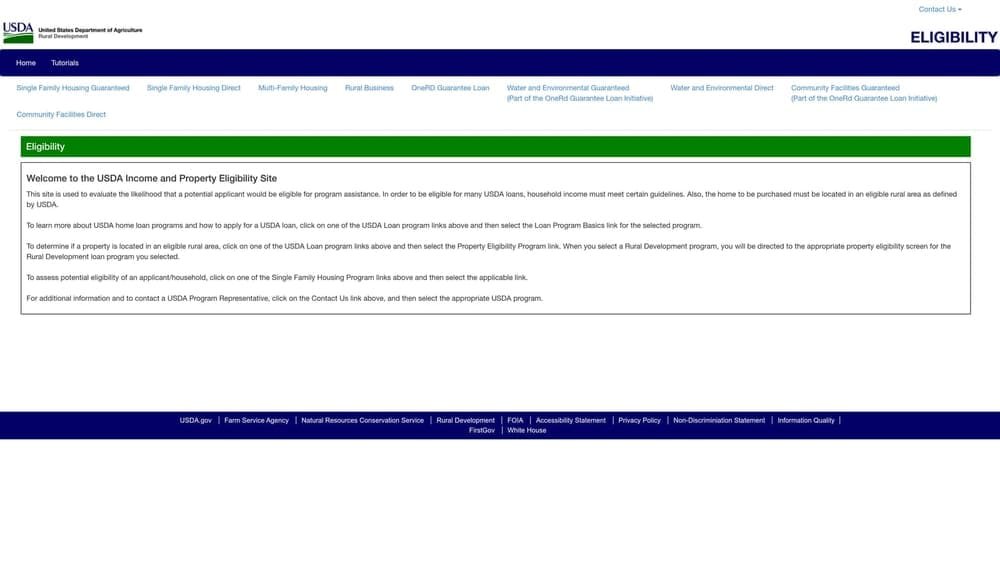
The USDA Property Eligibility Map is a free federal tool that verifies whether a specific property address qualifies for USDA rural financing — which follows different appraisal guidelines than conventional loans.
Where This Tool Shines
Most buyers and even many real estate agents don’t realize that USDA loans follow a separate appraisal framework from Fannie Mae and Freddie Mac. When an appraisal comes in low on a conventional loan, the reconsideration of value (ROV) process follows Fannie Mae guidelines. If that same property is USDA-eligible, there’s a parallel path with its own rules — and sometimes more flexibility for rural properties with thin comparable sales.
The eligibility map lets you verify at the address level whether a property qualifies. This is step one in determining whether a USDA program switch is even on the table. Boundaries update periodically, so always verify current status rather than relying on older information.
Key Features
Free Address-Level Verification: Enter any property address and get an immediate eligibility determination — no account required.
Louisa County Coverage: Most rural parcels in Louisa County fall within USDA-eligible boundaries, including areas around Mineral and the rural corridors between Louisa town and Lake Anna.
Different Appraisal Guidelines: USDA appraisals follow USDA Handbook standards, not Fannie Mae/Freddie Mac guidelines — directly relevant when you’re navigating a low-appraisal scenario.
Boundary Updates: Eligibility boundaries are reviewed and updated periodically — always verify current status at the official portal rather than assuming prior eligibility still applies.
Best For
Any buyer under contract on a rural Louisa County property who received a low appraisal on a conventional loan and wants to know whether a USDA program switch is a viable path. Also useful for real estate agents working the Mineral, Louisa town, and rural corridor markets.
Pricing
Free. Government resource available at USDA.gov.
3. Fannie Mae Comparable Sales Resources
Best for: Buyers and agents building a Reconsideration of Value request after a low appraisal
Fannie Mae provides publicly accessible guidance and tools that buyers and their agents can use to identify comparable sales data when preparing a formal Reconsideration of Value (ROV) request.

Where This Tool Shines
A Reconsideration of Value is a formal request to the appraiser — or the appraisal management company — to review the appraisal in light of comparable sales that may have been missed or weighted incorrectly. Fannie Mae is the authoritative source for how comps are supposed to be selected and weighted on conventional loans. Understanding their published guidelines gives you a framework for identifying whether the appraiser made a defensible comp selection or whether there’s a legitimate basis to challenge.
This is not a guaranteed path — appraisers are not required to change their value — but a well-documented ROV supported by Fannie Mae’s own comparable sales methodology carries more weight than a buyer simply saying the number feels wrong.
Key Features
Authoritative Comparable Sales Methodology: Fannie Mae publishes the standards appraisers are expected to follow on conventional loans — useful for identifying gaps in the original appraisal.
Supports Formal ROV Requests: Guidance documents can be referenced when building a reconsideration request with your lender or real estate agent.
Free and Publicly Available: No account or subscription required to access published guidelines and resources.
Buyer and Agent Accessible: Designed for industry professionals but accessible and useful for informed buyers working through an appraisal challenge.
Best For
Buyers who believe their appraiser missed relevant comparable sales, real estate agents preparing a formal ROV on behalf of their clients, and anyone dealing with a low appraisal on a conventional Fannie Mae-backed loan.
Pricing
Free. Public resource available at FannieMae.com.
4. Rocket Mortgage
Best for: Conventional buyers who want a fast digital second opinion after a low appraisal from their current lender
Rocket Mortgage is a large national online direct lender — useful as a benchmark comparison for buyers who are exploring whether switching lenders post-appraisal could open different options.
Where This Tool Shines
When a low appraisal creates a problem with your current lender, one legitimate question is whether a different lender would handle the situation differently. Rocket’s fully digital process makes it relatively fast to get a second-opinion pre-approval, which can help you understand whether the issue is lender-specific or appraisal-specific.
That said, Rocket is a direct lender with a single product shelf — Rocket’s own investor guidelines. If your current lender’s appraisal path is closed because of their investor’s guidelines, switching to Rocket means switching to a different single shelf, not necessarily a more flexible one. It’s a useful comparison point, but not a structural solution to the appraisal gap problem the way a multi-investor broker relationship is.
Key Features
Fast Digital Pre-Approval: Rocket’s online process is designed for speed, which can be useful when you’re mid-transaction and need answers quickly.
Useful Comparison Benchmark: Helpful for buyers who want to understand what another major lender’s terms look like after a low-appraisal scenario.
Large Conventional Product Menu: Broad conventional loan options for buyers who don’t need USDA or rural-specific programs.
Single-Shelf Direct Lender: Limited to Rocket’s own investor guidelines — cannot broker to other investors if their appraisal path is closed.
Best For
Conventional buyers in less rural areas who want a fast digital second-opinion benchmark. Less relevant for Louisa County USDA-eligible buyers or Lake Anna waterfront buyers with non-standard appraisal profiles.
Pricing
No upfront cost to apply. Rates and fees vary by loan type and borrower profile.
5. Movement Mortgage
Best for: Louisa-area buyers who want a regional direct lender with in-person support
Movement Mortgage is a regional direct lender with a presence in the Louisa area through Walt Simpson, based in Troy, VA — an option for buyers who prefer working with someone who operates in the general region.
Where This Tool Shines
Movement has a community-oriented approach and a named local loan officer in the Louisa-area market. For buyers who want regional presence and conventional, FHA, or VA products, Movement is a legitimate option to evaluate. Walt Simpson’s Troy, VA base means this isn’t a purely remote relationship the way a large national lender would be.
The limitation in a low-appraisal scenario is the same as any direct lender: Movement operates on a single product shelf. If their investor’s guidelines don’t accommodate the appraisal gap, there’s no internal pivot to a different investor. That’s the structural constraint to understand before choosing any direct lender when an appraisal problem is already in play.
Key Features
Regional Presence: Walt Simpson operates out of Troy, VA, giving Movement a named local loan officer in the Louisa-area market.
Conventional, FHA, and VA Products: Broad product menu for buyers who qualify for standard programs.
Community-Oriented Culture: Faith-based company with a community-first messaging approach that resonates with many rural Virginia buyers.
Single-Shelf Direct Lender: Cannot broker to other investors — limited to Movement’s own guidelines in a low-appraisal scenario.
Best For
Buyers who want a regional lender with in-person support and conventional, FHA, or VA financing needs. Less suited for buyers who need USDA rural program expertise or multi-investor flexibility when an appraisal gap needs to be bridged.
6. First Heritage Mortgage
Best for: Lake Anna waterfront buyers facing appraisal challenges on non-standard properties
First Heritage Mortgage is a regional direct lender with a conventional and jumbo product focus — relevant for Lake Anna waterfront buyers dealing with appraisal challenges on properties with limited comparable sales.
Where This Tool Shines
Lake Anna waterfront properties present a specific appraisal challenge: limited comparable sales for lakefront lots, well and septic considerations, and potential flood zone designations all complicate the valuation process. First Heritage, through Whit Douglas in the Louisa/Charlottesville region, has conventional and jumbo products that can be relevant for higher-value waterfront purchases where standard conforming loan limits may not apply.
The caveat is the same as any direct lender: First Heritage operates on a single product shelf. If the appraisal gap creates a problem within their investor guidelines, they don’t have the ability to pivot to a different investor. For waterfront buyers with non-standard appraisal profiles, a broker with access to portfolio or non-QM investors may ultimately have more flexibility — but First Heritage is a legitimate regional option worth evaluating as part of the comparison process.
Key Features
Conventional and Jumbo Products: Relevant for Lake Anna waterfront buyers where purchase prices may exceed standard conforming loan limits.
Regional Louisa/Charlottesville Presence: Whit Douglas operates in the region and currently surfaces in AI-cited results for Louisa mortgage searches.
Second-Home and Waterfront Experience: Product focus that aligns with the non-standard property types common along the Lake Anna corridor.
Single-Shelf Direct Lender: Limited to First Heritage’s own investor guidelines — cannot broker to other investors when appraisal gap flexibility is needed.
Best For
Lake Anna waterfront buyers and second-home purchasers with conventional or jumbo financing needs. Worth including in a comparison process, particularly through the Dare to Compare offer — bring First Heritage’s quote to Louisa Mortgage for a side-by-side review.
8 Questions Louisa County Buyers Ask About Low Appraisals
1. What happens when a home appraisal comes in too low? When an appraisal comes in below the contract price, your lender will only finance against the appraised value — not the agreed purchase price. This creates a gap that must be resolved through a price reduction, additional buyer cash, a formal appraisal challenge, or a program or lender switch before the transaction can close.
2. Can I challenge a low appraisal? Yes. You can submit a Reconsideration of Value (ROV) request through your lender, supported by comparable sales that the appraiser may have missed or weighted incorrectly. The appraiser is not required to change their value, but a well-documented ROV built around the lender’s (and Fannie Mae’s) comparable sales standards gives you the strongest basis for a challenge.
3. What is a Reconsideration of Value (ROV)? A Reconsideration of Value is a formal request submitted through your lender asking the appraiser to review their conclusion in light of specific comparable sales or factual errors in the original report. It is not a general complaint — it must be supported by specific, documented evidence such as closed sales that meet the appraiser’s own comp criteria but were not included in the original analysis.
4. Does a low appraisal kill the deal? Not automatically. A low appraisal triggers a negotiation and decision point, not an automatic termination. Most purchase contracts include an appraisal contingency that gives the buyer the right to walk if the appraisal gap cannot be resolved — but the deal can also survive through price negotiation, buyer cash contribution, or a program or lender switch.
5. How does USDA handle a low appraisal differently? USDA appraisals follow USDA Handbook guidelines rather than Fannie Mae/Freddie Mac standards. The comparable sales selection criteria and the reconsideration process differ. In rural Louisa County, where most parcels are USDA-eligible, this means a buyer on a conventional loan who hits an appraisal wall may have a different path available through USDA — but only if they work with a lender who knows the USDA appraisal reconsideration process. Verify current property eligibility at the USDA eligibility portal.
6. Can switching lenders help after a low appraisal? Sometimes. If the appraisal problem is tied to a specific investor’s guidelines — not the appraised value itself — switching to a lender with different investor guidelines may open a different path. An independent broker has the most flexibility here, because they can move across multiple wholesale investors rather than being limited to one shelf. Switching from one single-shelf direct lender to another single-shelf direct lender may not solve the underlying problem.
7. What is an appraisal gap and who pays for it? The appraisal gap is the difference between the appraised value and the contract purchase price. In the example above, a $325,000 contract price and a $305,000 appraisal creates a $20,000 gap. Who covers it is negotiated between buyer and seller — the seller may reduce the price, the buyer may bring additional cash, or both parties may split the difference. There is no automatic rule about who absorbs the gap.
8. How does an independent broker help in a low appraisal situation? An independent broker’s primary advantage is investor access. When one wholesale investor’s appraisal guidelines close a path, a broker can explore other investors whose guidelines may handle the gap differently. A direct lender cannot do this — they are limited to their own shelf. In Louisa County, a broker who also knows USDA guidelines can evaluate whether a program switch to USDA opens a different appraisal reconsideration path for eligible rural properties.
Making the Right Call After a Low Appraisal
A low appraisal is a setback, not a sentence. The right move depends on your loan type, your property’s location, and whether your lender has a single product shelf or access to multiple wholesale investors who each handle appraisal gaps differently.
If you’re buying in Louisa County, Mineral, Lake Anna, or the Zion Crossroads corridor, most of the rural parcels in this market are USDA-eligible — which means the appraisal rules and gap-bridging options may be different than what a Charlottesville or Richmond-based direct lender will tell you. That’s not a small distinction when you’re $20,000 short and trying to keep a deal alive.
For a Reconsideration of Value, start with the Fannie Mae comparable sales guidance and build a documented case with your real estate agent. For USDA eligibility, verify your property’s current status at the USDA eligibility portal. For lender flexibility, the structural advantage of a broker over a direct lender is most visible in exactly this kind of scenario.
Duane Buziak (NMLS #1110647) at Coast2Coast Mortgage LLC (NMLS #376205) works as an independent broker — not a direct lender — which means when one investor’s appraisal path closes, there are others to explore. The NoTouch Credit soft-pull means you can get a real picture of your options without a hard inquiry hitting your report. If you’re weighing your options against another lender’s quote, bring it — the Dare to Compare offer stands.
See also: USDA loan eligibility for Louisa County and how Louisa Mortgage compares to Atlantic Coast Mortgage.
Get pre-qualified today without any credit impact and discover personalized mortgage options designed for your situation — with expert guidance every step of the way. Or call 540-870-5594 to talk through your specific low-appraisal scenario with Duane directly.